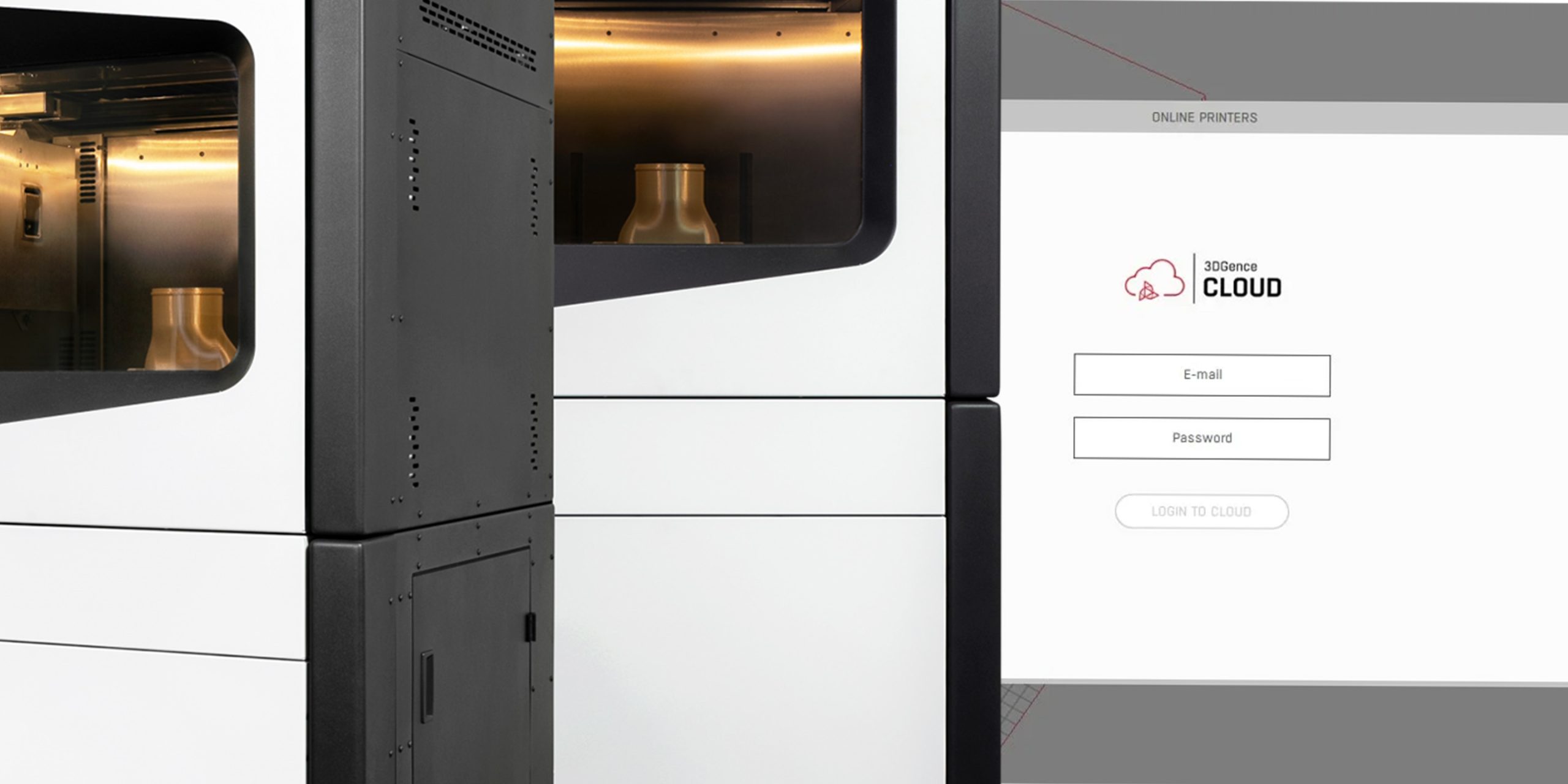
3D printing is no longer the stuff of science fiction; it is now part of our everyday lives. 3D printers are used by industry, schools, designers, medicine and many other professional fields. Thanks to the fact that this industry is developing very fast, we have to deal with better and smaller 3D printers and we can use them literally everywhere. It is well known that industry needs large printers to be able to produce, for example, prototypes of devices; this is what the automotive industry does, for example. A company that has achieved great success in the 3D printing industry is 3DGence, and a dedicated software has been developed for this company.
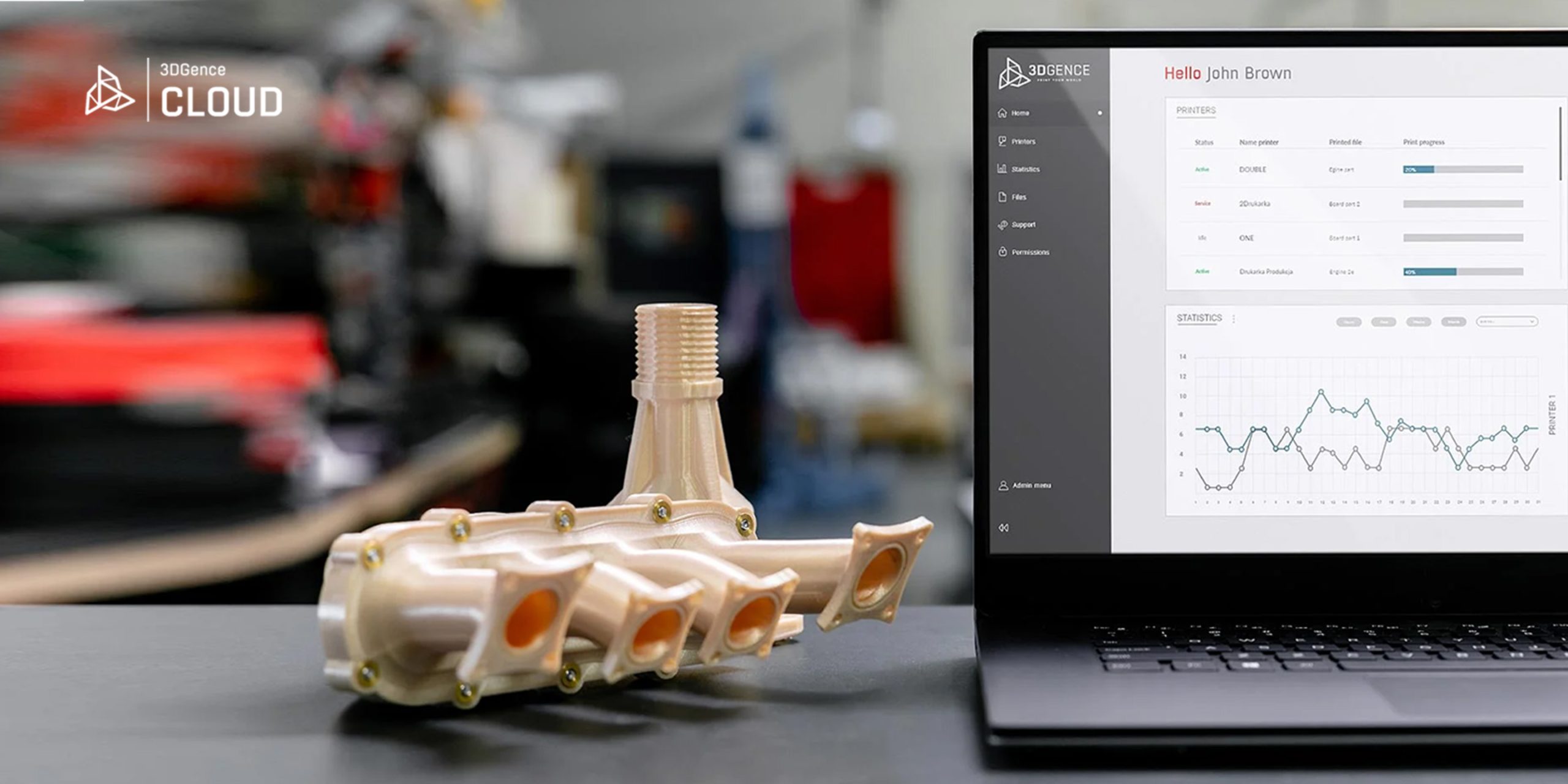
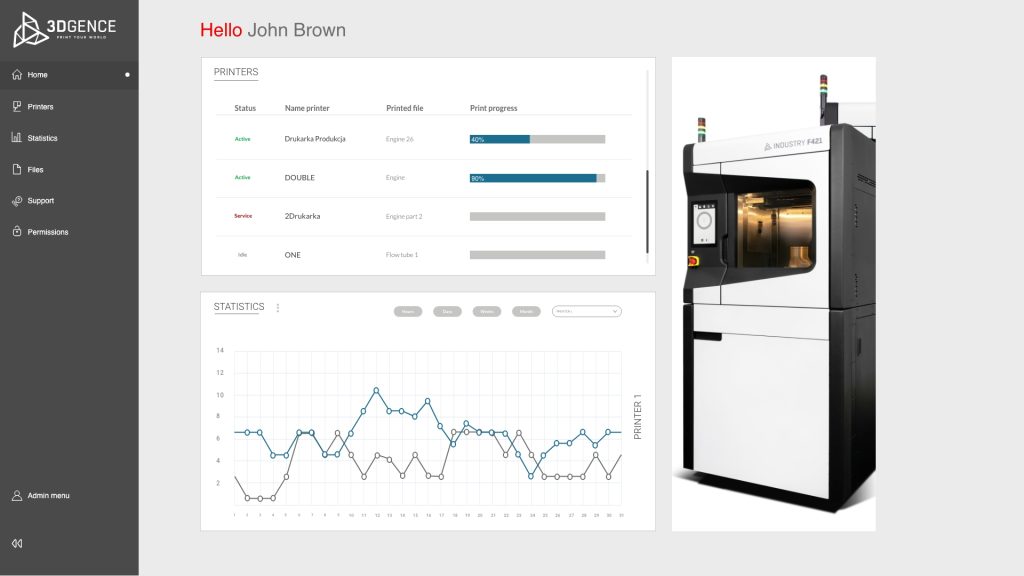
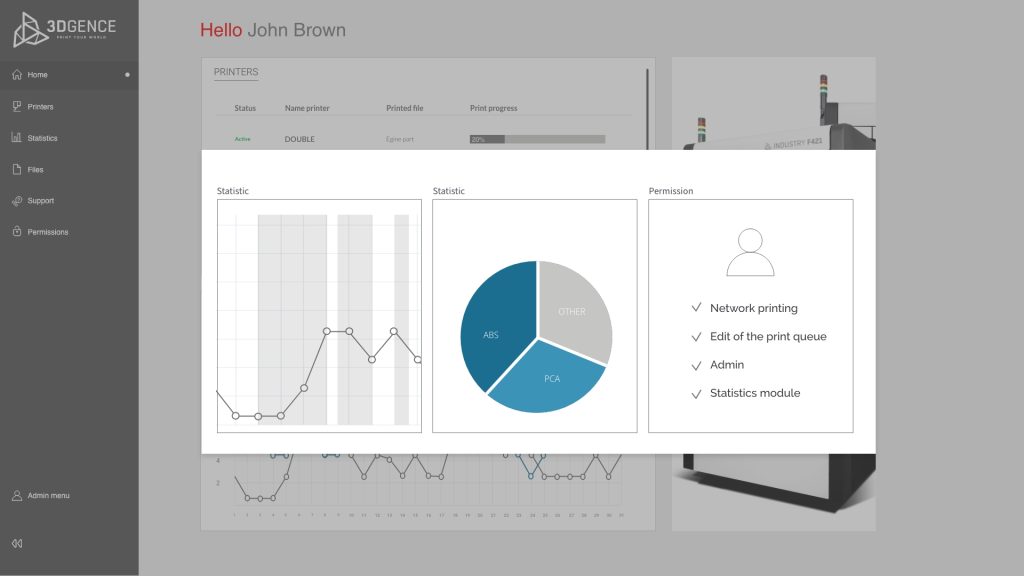
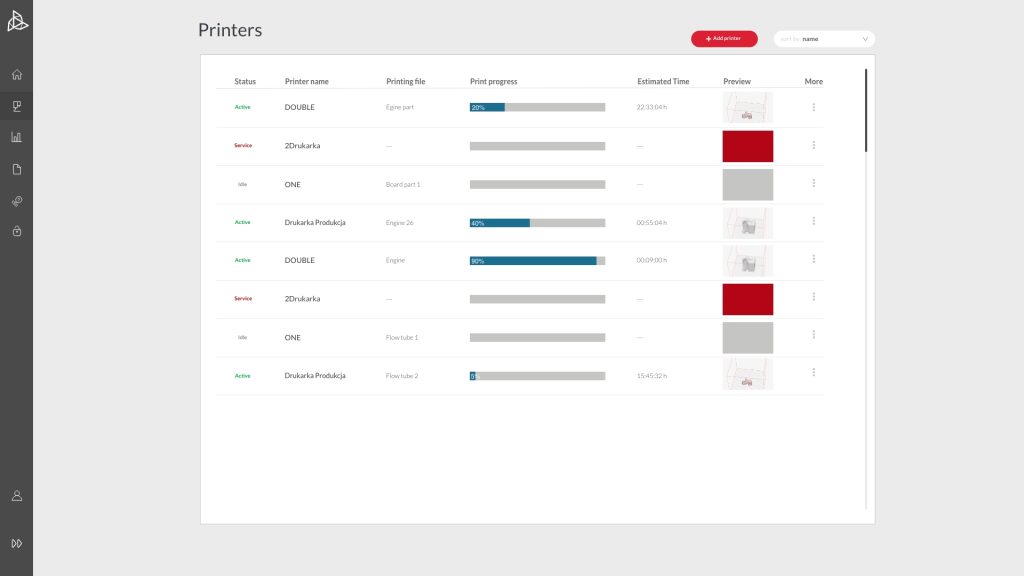
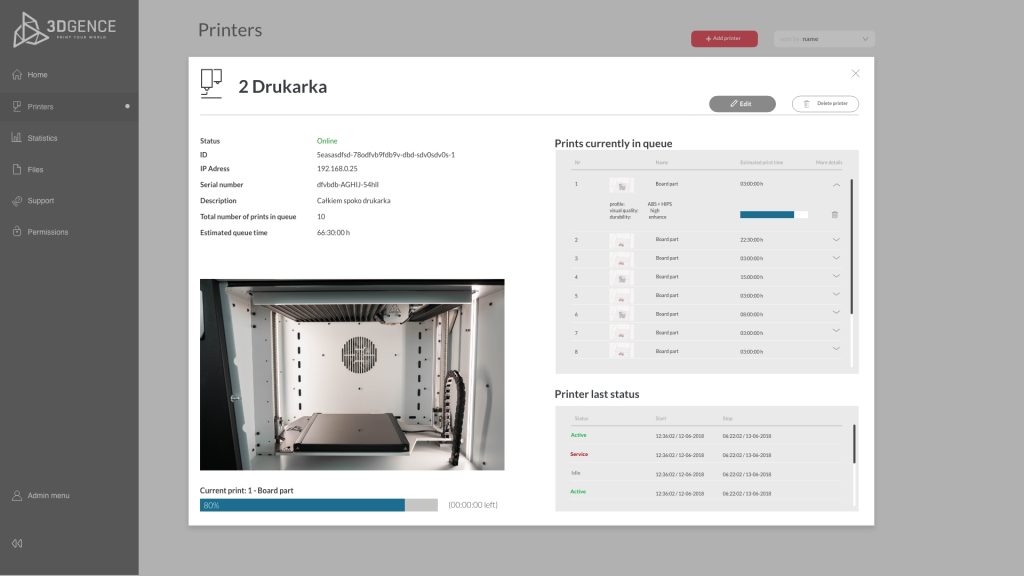
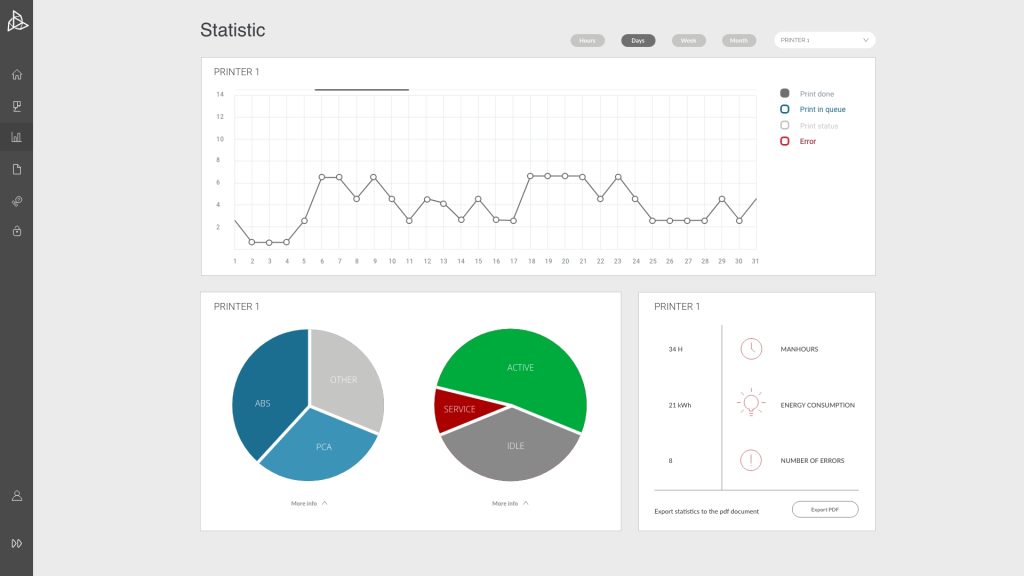
3DGence CLOUD is a cloud-based software for industrial printers designed to meet the needs of Industry 4.0. It includes services and features such as starting or queuing prints, remote monitoring of the printer and print status, file sharing, live camera viewing and statistics collection.
Problem
As the 3D printing market grows, more and more companies are acquiring such printers. One or two printers are not a problem. The problem arises when a company has a whole fleet of printers, several 3D printers in different parts of the company or in different parts of the world.
The simplest solution would be to place them all next to each other and have one employee for all printers, but as life shows, this is not possible, especially since the time needed to administer all printers by one person would be extremely long. There would be production downtime, prototypes would not be ready on time, etc.
So, the challenge arose: how to scale production without chaos?
Managing a dispersed machine park generates real operational problems:
Time-consuming administration – Difficulty in controlling multiple devices by one person.
Risk of downtime – Lack of immediate knowledge about failures or filament running out.
Geographical barriers – Difficult access to machines located in other branches of the company.
Delays in servicing – Long process of diagnosing faults and communicating with technical support.
Solution
3DGence Cloud Ecosystem
Our goal was to create a tool that goes beyond simple device control. Instead of a simple control panel, we designed a comprehensive cloud ecosystem that integrates a distributed printer infrastructure into a single, coherent organism.
Data-driven process
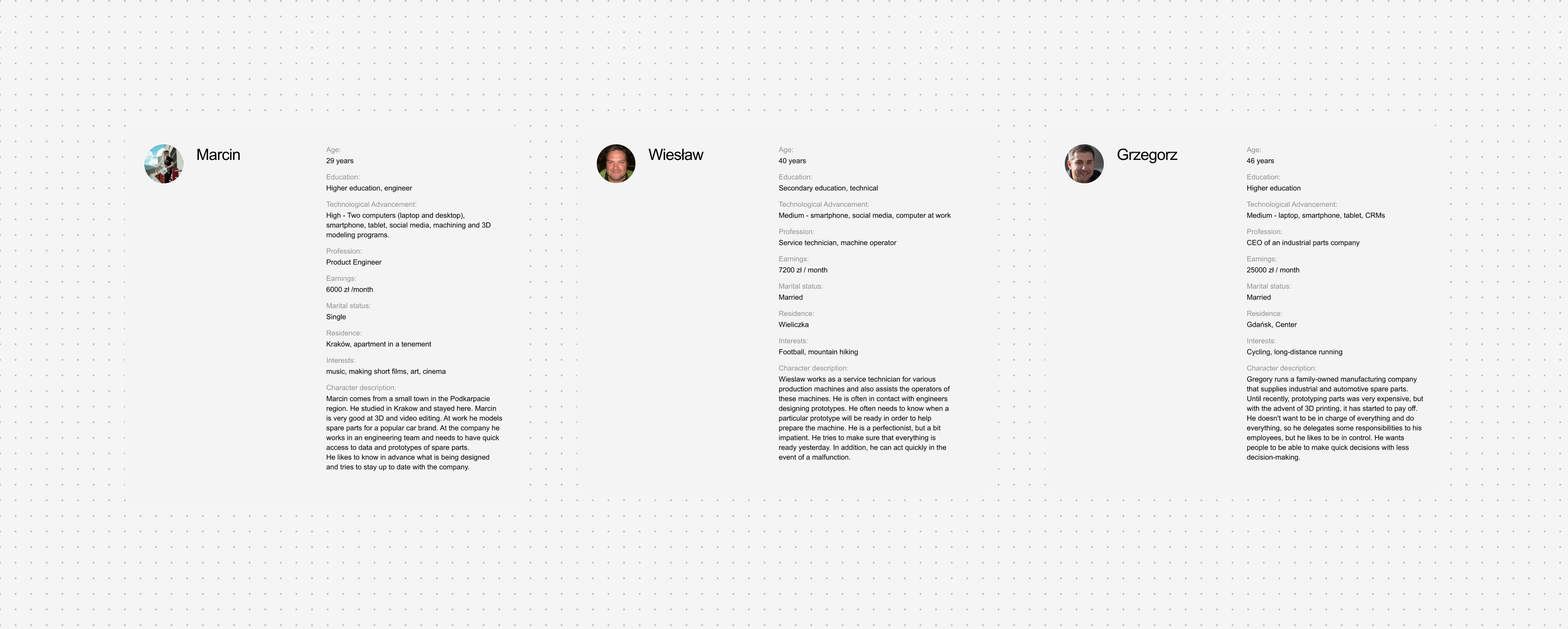
We verified the initial assumption of remote operation during workshops and user research. By identifying three key target groups and analyzing feedback from current customers, we identified real barriers in everyday work with 3D printing. This allowed us to move from a simple “preview” idea to an advanced tool supporting Industry 4.0.
Key Features
Real-time monitoring
We have introduced live camera previews and real-time filament status tracking, eliminating the stress of uncertainty about the status of your print.
Simplified service path
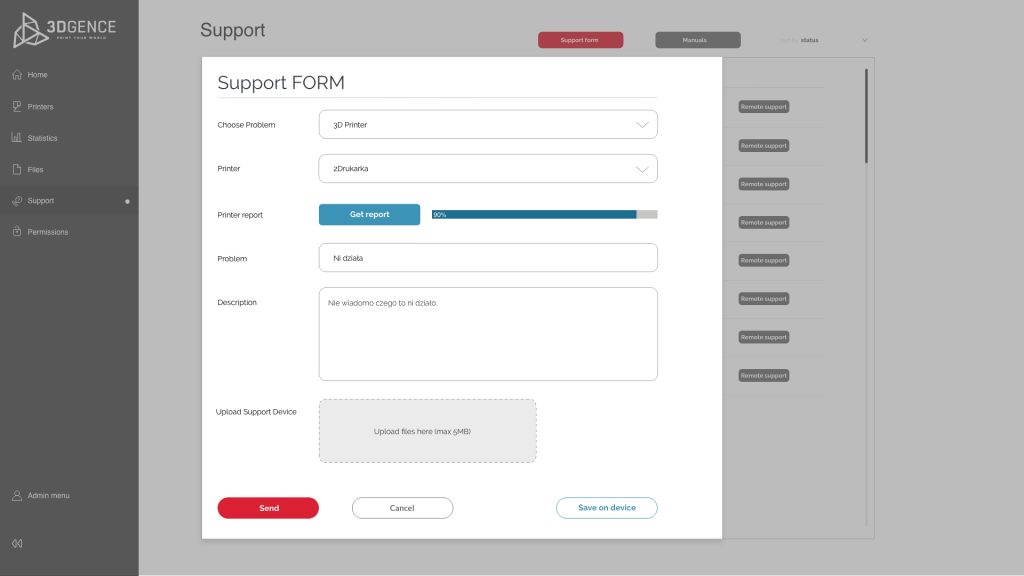
We have shortened the distance between the user and technical support. Failures can now be reported directly from the interface, and the remote diagnostics sharing feature allows for immediate assistance without the need for a service technician visit.
Seamless Flow
We have integrated 3DGence Cloud with a dedicated Slicer. This allows users to go through the entire process—from file preparation to final printing—within a single, consistent environment.
Scalability and availability
We designed the system to handle a single machine just as efficiently as a global network of printers, giving operators full control from anywhere in the world.
Effect
Every user of 3DGence 3D printers has received an intuitive command center that minimizes the risk of errors, reduces production downtime, and ensures full transparency of service processes.
We divided the work on the product into 4 phases.
Phase 1
We wanted to find out exactly how we could support the printers in the development of the product from a technical point of view. In addition, the goals of the support department were revealed, where it turned out that a product like 3DGence Cloud could notify and remotely share its software for the support department and help customers in other ways.
Phase 2
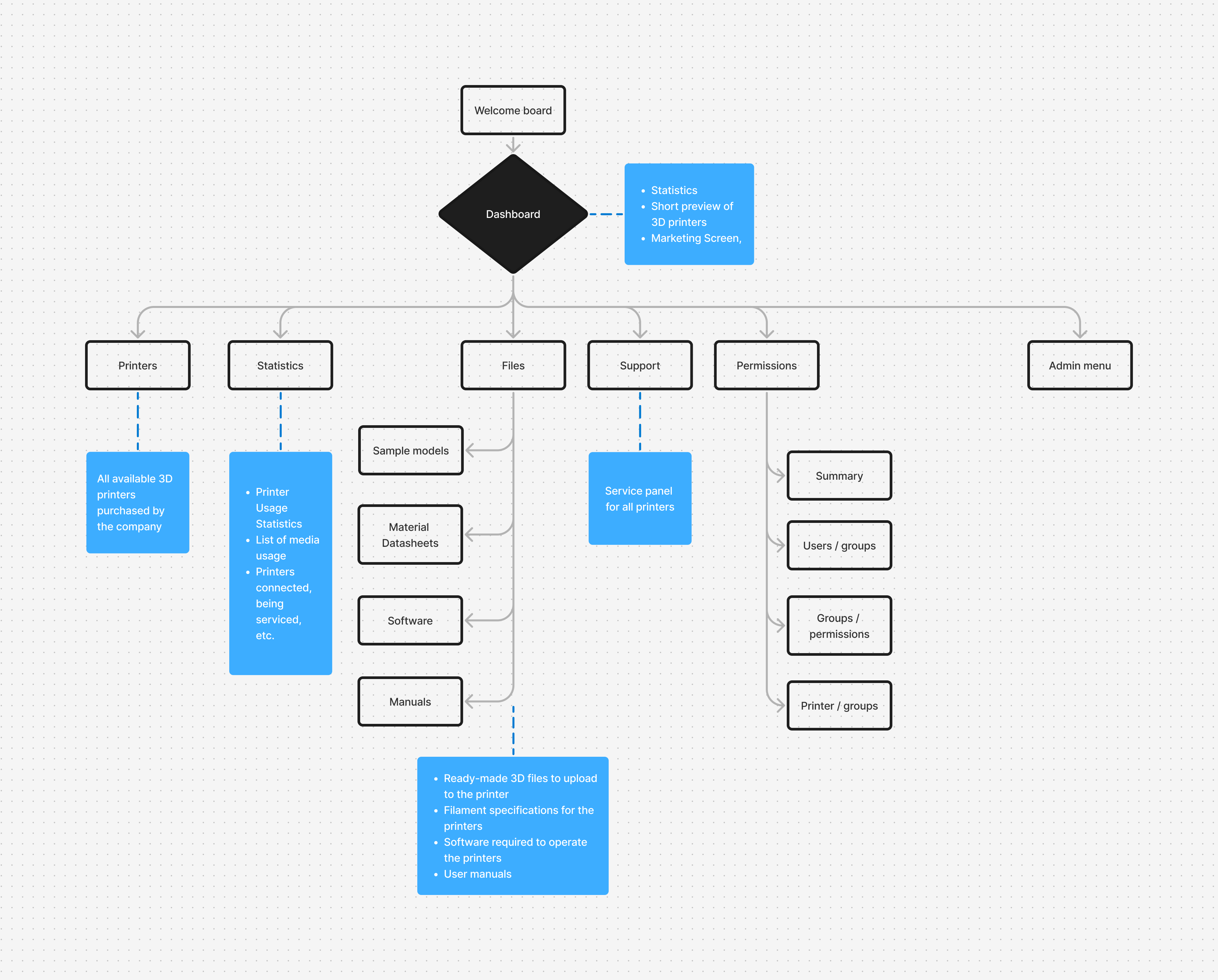
Product concept creation. After an initial analysis, we developed several personas and began creating a user journey. Preliminary mockups were also created. With the development team, we selected the appropriate tool to build the product.
Phase 3
In cooperation with the developers, a test application was created, which was
was tested internally and at a cooperating company. As a result, an mvp product was created.
Phase 4
The final stage was the implementation of the product. At each stage, the team consisted of designers, engineers and developers.
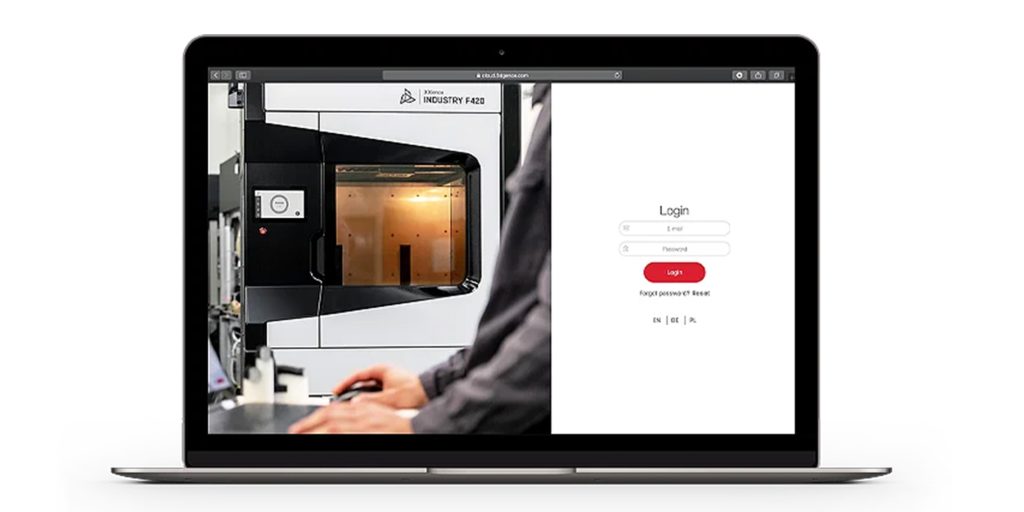
A few screens of the 3DGence Cloud
Do you like my work? Contact me and maybe we’ll do something cool together.